
If you are searching for professional barista training, you are already taking the first step toward a rewarding career in the coffee industry. A quality training program teaches practical skills, builds confidence, and prepares you to work in cafés, hotels, restaurants, or even run your own coffee business. Moreover, hands-on learning helps you master coffee preparation faster than learning on your own.
Today, employers value trained baristas who understand coffee quality, customer service, and café operations. Therefore, investing in professional training can open many career opportunities.
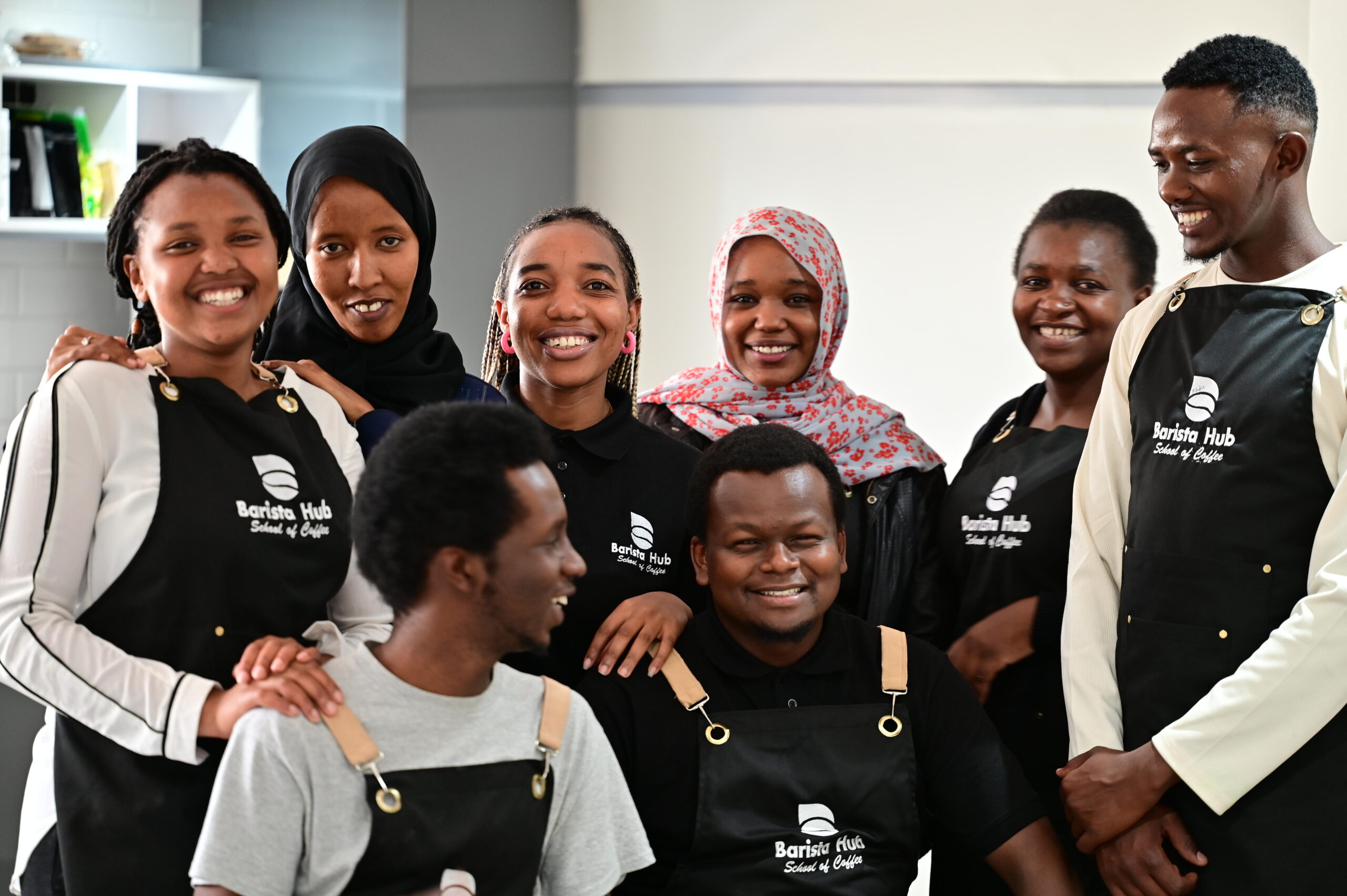
Image Caption: Students receiving practical barista training using professional espresso equipment.
Image Description: Learners practicing espresso extraction, milk steaming, latte art, brewing techniques, and customer service during professional barista training.
First, professional training provides real workplace experience. Students prepare coffee using commercial espresso machines and modern café equipment. As a result, they become comfortable working in busy coffee shops.
In addition, experienced instructors explain coffee theory while supervising practical sessions. This combination helps students develop both technical skills and confidence.
Therefore, graduates finish with practical knowledge that employers appreciate.
Students learn by preparing coffee every day. Consequently, they improve their speed, consistency, and beverage quality.
Experienced trainers share techniques used in successful coffee shops. Moreover, learners receive personalized feedback throughout the course.
Many employers prefer trained baristas because they require less supervision. Because of this, certified graduates often have a competitive advantage.
Some students plan to open their own cafés. Therefore, many programs also introduce café operations, inventory management, pricing, and customer experience.
This course is ideal for anyone interested in coffee or hospitality.
Furthermore, beginner courses require little or no previous coffee knowledge.
As a result, graduates become confident professionals who can perform efficiently in different hospitality environments.
Completing professional training can lead to several exciting careers.
Moreover, coffee professionals can work in hotels, restaurants, airports, resorts, and specialty cafés worldwide.
Reading about coffee is helpful. However, real improvement comes from practical experience. Students repeatedly prepare espresso, steam milk, and create latte art until each skill becomes natural.
Because of this, employers often prefer candidates with extensive practical training.
Before enrolling, compare different training providers carefully.
Finally, choose a school that combines classroom learning with practical coffee preparation.
Ready to develop your coffee skills? Browse our complete training programs and choose the course that matches your goals.
Need help selecting the right course? Our experienced team is happy to answer your questions.
Many coffee professionals enjoy visiting coffee farms and international cafés to expand their knowledge. For example, travel planning resources such as Spot On Vacations can help organize memorable coffee-related trips.
Likewise, maintaining good health supports long shifts in hospitality. Helpful wellness information is available from Nur Fertility.
Barista training teaches coffee preparation, espresso making, milk steaming, latte art, brewing methods, customer service, and café operations.
The duration depends on the course. Beginner programs may last several days, while advanced courses can take several weeks.
No. Most beginner programs welcome students with little or no coffee experience.
Yes. Most professional training providers issue certificates after successful course completion.
Yes. Practical skills gained during training prepare graduates for entry-level barista positions in cafés, hotels, and restaurants.
Absolutely. Professional training provides valuable operational knowledge that supports café ownership.
Professional barista training gives you the practical skills, confidence, and industry knowledge needed for a successful coffee career. Whether you want to become a skilled barista, manage a café, or launch your own business, quality training provides the foundation for long-term success.
Take the next step toward becoming a professional barista. Explore our comprehensive training programs, gain real-world experience, and learn from industry experts. Visit our courses page or contact our team today to begin your journey.
