Building a Coffee Career in Kenya: Skills That Matter

Building a Successful Coffee Career in Kenya
Kenya has a strong coffee culture and a growing hospitality industry, creating opportunities for people who want to build careers around coffee. From specialty cafés and hotels to restaurants, coffee shops, roasteries, and independent businesses, skilled coffee professionals are increasingly important to the customer experience.
However, becoming a professional barista involves much more than learning how to operate an espresso machine. A successful coffee professional needs practical brewing skills, knowledge of coffee, customer service abilities, attention to detail, and the confidence to work efficiently in a busy café environment.
For anyone considering a career in the industry, structured coffee education can provide an important foundation. Barista Hub Kenya focuses on hands-on specialty coffee training, professional barista skills, certification, latte art, roasting, and coffee education at its training facility in Westlands, Nairobi.
Why Professional Barista Training Matters
Coffee preparation combines technical knowledge and practical skill. Two people can use the same coffee beans and equipment but produce very different results depending on their technique.
Professional training gives learners an opportunity to understand what happens at every stage of preparation. Instead of simply memorizing recipes, students can learn how grind size, extraction time, water, temperature, milk texture, and workflow influence the final beverage.
Learning Through Practical Experience
Hands-on practice is particularly important when learning coffee preparation. A learner needs time behind the espresso machine to understand how adjustments affect extraction and how to identify problems with a shot.
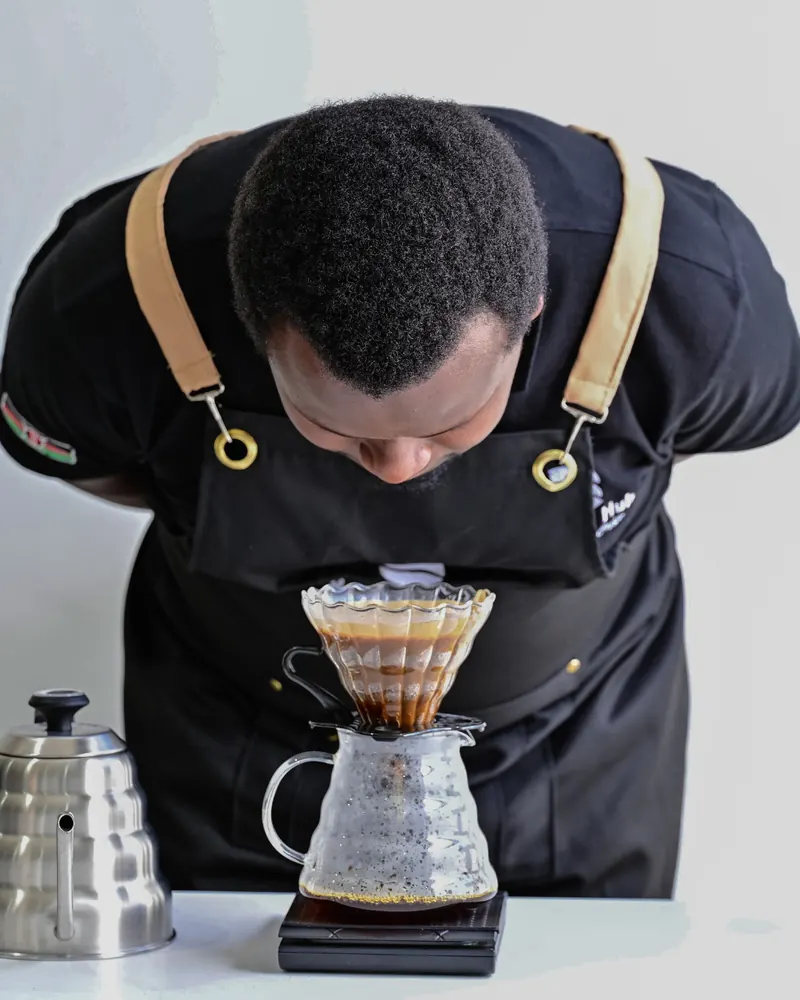
Barista Hub's training approach emphasizes practical skills and professional equipment, helping students become familiar with techniques used in real café environments. Its professional barista course covers areas such as espresso preparation, milk texturing, brewing methods, café workflow, customer service, equipment care, and coffee business fundamentals.
Essential Skills Every Professional Barista Should Develop
A strong barista needs a combination of technical, sensory, and interpersonal skills. Developing these areas can make it easier to adapt to different cafés, customers, equipment, and coffee styles.
Espresso Extraction
Espresso is at the heart of many café beverages. Understanding extraction helps a barista produce consistent shots and recognize when something needs to be adjusted.
Learners should become comfortable with important variables such as grind size, dose, yield, extraction time, tamping technique, and workflow. Consistency is especially important in a commercial café, where customers expect the same quality each time they order their favorite drink.
Milk Steaming and Latte Art
Milk preparation is another important part of modern café service. Properly textured milk can improve both the mouthfeel and appearance of drinks such as cappuccinos, lattes, and flat whites.
Latte art takes this skill further by teaching baristas how to control milk texture and pouring technique. Learners can progress from simple hearts to more advanced designs such as rosettas and tulips.
Barista Hub's Latte Art Mastery program focuses on milk steaming, texture, pouring techniques, and designs using both dairy and non-dairy milk.
Understanding Coffee Origins
Great coffee preparation starts before the beans reach the café. Understanding coffee origins gives baristas greater insight into how factors such as variety, processing, altitude, roasting, and origin can influence flavor.
Kenyan coffee is particularly interesting for students because the country has a well-established coffee-growing tradition and distinctive Arabica profiles. Learning about origin helps baristas communicate more confidently with customers and appreciate the relationship between farming, processing, roasting, and brewing.
From Coffee Training to Career Opportunities
Professional coffee skills can support several career paths. A learner may begin as a café barista and later move into roles involving coffee quality, roasting, training, café management, or entrepreneurship.
Cafés and hotels need employees who can prepare beverages consistently while maintaining good customer service. Roasteries require people who understand production, quality control, and sensory evaluation. Entrepreneurs may need a combination of coffee knowledge and business skills to establish and manage their own café.
Working in Cafés and Hotels
For someone entering the hospitality industry, barista training can provide practical skills that can be applied in cafés, restaurants, hotels, and other food-service environments.
However, technical coffee knowledge is only one part of the job. Professional communication, cleanliness, speed, teamwork, order accuracy, and customer interaction are equally important during busy service periods.
Starting a Coffee Business
Some coffee enthusiasts eventually decide to establish their own café or coffee-related business. This requires a broader skill set than beverage preparation alone.
Business owners need to understand menu development, pricing, inventory, equipment, staffing, customer experience, marketing, and operational costs. Barista Hub's professional training also introduces learners to café business fundamentals, including cost control, menu planning, pricing, and operational best practices.
Why Customer Service Is Part of Barista Training
A café experience is not defined by coffee alone. Customers also remember how they were welcomed, how quickly their order was prepared, and how staff responded to questions or special requests.
A skilled barista should therefore understand how to communicate clearly and professionally. They should be able to explain beverages, accommodate reasonable customer preferences, manage queues, and remain organized during busy periods.
This combination of technical ability and hospitality creates a stronger customer experience and can encourage customers to return.
Technology Is Changing Hospitality Businesses
The modern hospitality industry increasingly depends on technology. Online ordering, digital payments, customer databases, websites, social media, booking systems, and business management platforms have become part of everyday operations for many businesses.
Understanding technology can therefore complement traditional hospitality skills. Someone planning to open a café, restaurant, or hospitality business can benefit from learning how digital systems support customer communication, marketing, sales, and operations.
Technology is also transforming other customer-focused industries. For businesses operating in online entertainment and hospitality-related sectors, solutions such as iGaming CRM platforms demonstrate how specialized software can organize customer relationships, workflows, and operational processes.
Although an iGaming CRM has a different purpose from café management software, the underlying principle is relevant across customer-service businesses: organized digital systems can help businesses manage interactions efficiently while allowing staff to focus on delivering better experiences.
Understanding Equipment and Maintenance
Professional coffee equipment represents a significant investment for cafés and coffee businesses. Baristas therefore need to understand not only how to use machines and grinders but also how to care for them.
Daily cleaning, correct backflushing procedures, grinder maintenance, steam wand cleaning, and basic troubleshooting can help maintain equipment performance and beverage consistency.
Equipment knowledge can also help baristas identify problems before they affect an entire service. A grinder that is poorly calibrated, for example, can change extraction and affect every espresso prepared during a shift.
Learning About Coffee Roasting
Roasting provides another career path within the coffee industry. A roaster needs to understand how heat affects green coffee and how different roast profiles influence aroma, acidity, sweetness, body, and other sensory characteristics.
Professional roasting education can cover green coffee selection, production roasting, cupping, quality analysis, roast profile development, consistency, and roastery operations.
Barista Hub's Professional Roasting Course covers areas including cupping and quality analysis, production roasting, and roastery management. The program is designed to provide practical knowledge for people interested in developing deeper expertise beyond café preparation.
Transport and Mobility in the Hospitality Industry
Hospitality businesses also depend on reliable transportation. Hotels, restaurants, cafés, event companies, catering businesses, and suppliers may need vehicles for staff movement, deliveries, equipment transportation, events, or business operations.
Choosing an appropriate vehicle depends on the specific requirements of the business. A small vehicle may be sufficient for administrative travel, while larger commercial vehicles may be necessary for transporting equipment, supplies, or goods.
Businesses researching commercial vehicles and transportation options in Kenya can also explore commercial vehicles and automotive solutions from Habiba Motors when evaluating vehicles for operational requirements.
How to Choose a Barista Training Program
Not every coffee course provides the same depth of practical experience. Before enrolling, prospective students should consider what they want to achieve and whether the program provides the right balance between theory and practical training.
Consider the following factors:
- Practical training: Look for opportunities to work directly with professional coffee equipment.
- Course content: Check whether the curriculum covers espresso, brewing, milk preparation, coffee knowledge, and customer service.
- Instructor experience: Experienced instructors can provide practical insights that go beyond textbooks.
- Certification: Check whether the qualification or certificate is recognized and relevant to your career goals.
- Equipment: Training on professional equipment can make the transition into a commercial café environment easier.
- Business knowledge: If you plan to open a café, look for training that introduces business and operational concepts.
- Location: A convenient training location can make it easier to attend practical sessions consistently.
Why Westlands Is a Practical Location for Coffee Training
Westlands is one of Nairobi's established commercial and hospitality areas, making it a practical location for people interested in coffee and hospitality careers.
Barista Hub is located at the Mezzanine Floor, Soin Arcade, Westlands Road, Westlands, Nairobi. The school describes its facility as a hands-on coffee training environment equipped for professional learning.
For students living or working around Nairobi, accessibility can be an important consideration when choosing a training institution. Regular practical sessions are easier to maintain when the training location fits comfortably into a learner's schedule.
Building Confidence Behind the Coffee Bar
Confidence comes from repeated practice. A new barista may understand espresso theory but still need considerable practice before consistently producing quality drinks during a busy service.
Structured training provides an environment where learners can make mistakes, receive feedback, adjust their technique, and repeat the process. Over time, this helps turn individual techniques into a reliable workflow.
The goal is not simply to make one good cup of coffee. It is to develop the ability to reproduce quality consistently while serving customers efficiently.
Start Building Your Coffee Skills
A career in coffee can begin with curiosity, but professional development requires structured learning and practical experience. Whether your goal is to become a professional barista, specialize in latte art, understand coffee roasting, work in hospitality, or eventually establish your own coffee business, developing the right skills can provide a strong foundation.
Barista Hub Kenya offers professional barista training, roasting education, latte art training, and broader coffee education for learners at different stages of their journey. Its programs are designed around practical skills, professional equipment, experienced instructors, and career-focused learning.
If you are ready to turn an interest in coffee into practical expertise, exploring a structured coffee training program can be the next step. With the right training, consistent practice, and a commitment to learning, today's coffee enthusiast can develop the skills needed for tomorrow's café, roastery, or hospitality career.
Train with Barista Hub School of Coffee. NITA-certified barista courses in Westlands, Nairobi: Professional Barista Course (KSh 52,000), Latte Art Mastery (KSh 10,000) and Professional Roasting Course (KSh 75,000). Apply now or WhatsApp 0710 793 263.